
Say Goodbye to Mercury: Modern Biomimetic Alternatives to Amalgam
If you’re an adult who grew up before the 1990s, there’s a reasonable chance your mouth contains at least one amalgam filling. You’ve had it for years, it’s never caused obvious trouble, and you’ve probably never given it much thought. But as more patients start asking questions about what’s in their teeth, and what the alternatives look like, it’s worth having an honest conversation about where the science and the options currently stand.
What’s Actually in Amalgam?
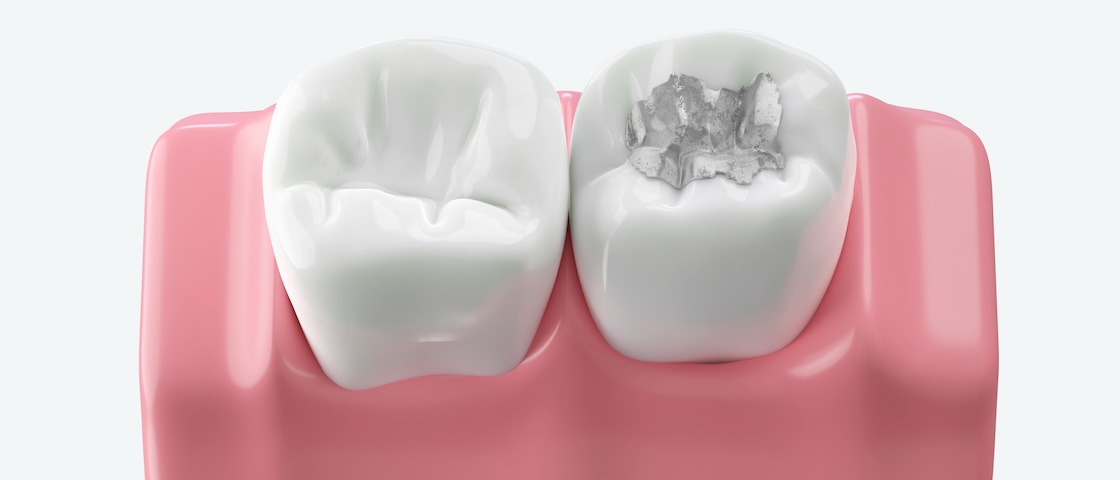
Dental amalgam is a metal alloy that’s been used in dentistry for well over a century. It’s roughly 50% mercury by weight, combined with silver, tin, and copper. For a long time, it was the default choice for back teeth because it’s hard-wearing, relatively easy to place, and inexpensive. It did the job. But durable and ideal are not the same thing, and both patient expectations and materials science have moved on considerably since amalgam became the standard.
The Safety Question
Mercury exposure from amalgam fillings is a topic that generates a lot of heat online, and it’s worth approaching it calmly. What the evidence does show is that amalgam fillings can release low levels of mercury vapour, particularly during chewing and grinding. For most people with stable, intact fillings, this has not been shown to cause measurable harm. That said, concern is understandable, and it’s legitimate.
Where the risk becomes more significant is during removal. Drilling out an amalgam filling without proper precautions generates mercury-containing particles and vapour in significant quantities. Safe amalgam removal protocol addresses this directly. At a practice that follows best practice, you can expect the use of a rubber dam to isolate the tooth, high-volume suction to capture debris, sectioning of the filling into chunks rather than grinding it down, and appropriate protective measures for both patient and clinical team. The process matters as much as the decision to remove.
What Replaces It
The modern alternative to amalgam is composite resin, placed using adhesive and biomimetic techniques. The contrast with amalgam is substantial. Amalgam requires the cavity to be shaped in a specific way, so the filling is mechanically locked in, which often means removing healthy tooth structure that didn’t need to go. Composite bonds directly to enamel and dentine, meaning the preparation can follow the decay rather than being dictated by the material.
Biomimetic composite restorations are also designed to match the flex and strength characteristics of natural tooth structure, distributing biting forces in a way that protects the tooth rather than working against it. They’re tooth-coloured, biocompatible, and when placed well, they’re built to last.
Is Replacement Right for You?
This is where a balanced perspective matters. Not every amalgam filling needs to be replaced, and a good dentist will tell you that. If your existing fillings are intact, well-sealed, and not causing any structural concerns, the case for immediate replacement is not always clear-cut. Removing a stable filling carries its own risks if it isn’t done carefully.
The conversation becomes more relevant when fillings are ageing and showing signs of deterioration, when margins are breaking down, or when a filling is already due for replacement for other reasons. In those situations, choosing a biomimetic composite restoration over a new amalgam filling is a straightforward decision.
Thinking About Making the Switch?
At Lifetime Dental, we take a considered approach to amalgam replacement, using safe removal protocols and biocompatible biomimetic materials. If you’d like to understand what your existing fillings look like and whether replacement makes sense for you, we’re happy to talk it through. Book a consultation with our team and we’ll give you an honest picture of your options.


Comments are closed.